Too Much on Your Mind? Try This Free Next-Step Planner
JCT Practical Guides · A free tool for your next step
Before adding another task to your week, ask a smaller question: what is one decision that would make the next few days easier? Perhaps a personal project keeps getting postponed. Perhaps one person is carrying most of the remembering at home. Or perhaps you have a business idea and need to learn whether the problem is real.
We have created a free next-step planner to help you turn one of those situations into a small, usable plan. You choose a focus, write your next action, decide when to start and prepare a smaller version for a busy day. You can download the result as a text file or print it. No account, email address or purchase is required to use the planner.
Try the free next-step planner →
1. Give the next action a visible finish line
“Work on my project” leaves several decisions unresolved. Which part? How much? What would count as progress? A more concrete action might be “write five bullet points for the opening section.” You can see when that action has been completed, and you can start without redesigning the whole project.
Choose a result small enough for the time and energy you actually expect to have. If your evening already contains travel, dinner and preparation for another shift, put those commitments into the picture before adding optional work.
2. Match the plan to the problem
Different situations call for different kinds of next steps. These are illustrative examples you can adapt:
- A personal project: prepare an outline for one section. If the day becomes crowded, write one useful bullet point and leave the file ready for the next session.
- A household responsibility: discuss who will notice, list, buy and put away the household supplies. Agree on the necessary result and a review date, so the remembering is included in the conversation.
- A business idea: ask one potential customer about the last time they faced the problem. Find out what they did and what they had already tried. Record what you heard separately from your interpretation.
For a business idea, a friendly response is an early observation. A paid order, confirmed use and repeat demand answer different questions. Keep track of which kind of evidence you actually have before spending more time building.
3. Choose when, and prepare for an ordinary interruption
A useful plan gives the action a plausible place in your schedule. “After work tomorrow, for 15 minutes” is more specific than “sometime this week.” Treat the duration as a planning estimate and adjust it after trying the task.
Then write down the smaller version. If your original action is an outline, the fallback could be one bullet point. If you planned a conversation, the fallback could be writing the three questions you want to discuss. A smaller action should still move the situation forward.
4. Review what happened
After the session, ask what you completed, what got in the way and what needs to change. You might shorten the next action, move it to another day or obtain information you were missing. A plan becomes useful through those decisions.
The free planner follows this simple structure. It uses the answers you enter to assemble your plan and point you toward the relevant guide. Your answers stay in your browser tab; download or print the plan if you want to keep it.
Explore the Practical Solutions Collection
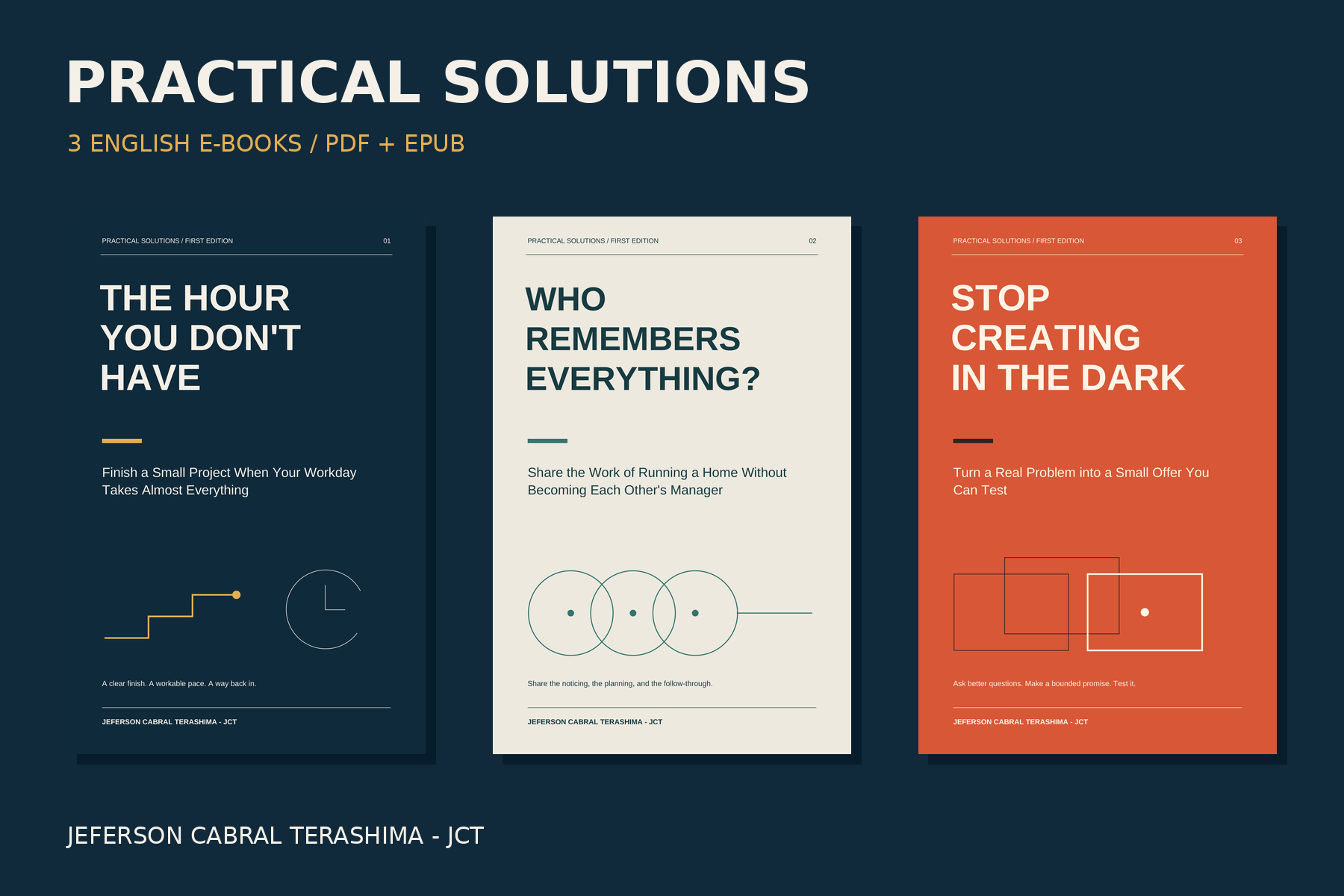
For readers who want more examples and worksheets, our collection brings together three English eBooks by Jeferson Cabral Terashima — JCT:
- The Hour You Don't Have: making room for a small project around demanding work and limited free time.
- Who Remembers Everything?: sharing household responsibilities from noticing through follow-through.
- Stop Creating in the Dark: exploring a customer problem and testing a clearly scoped offer.
The digital collection contains three PDF editions, three EPUB editions and 17 worksheets across the books, delivered in one ZIP file. Check the current price, contents and purchase details on Payhip. These guides offer practical proposals and examples; individual circumstances and results vary.
Make your free plan → View the collection on Payhip →
Publisher's note: This article introduces our own digital guides. The planner is free to use, and buying the collection is optional. Purchases and eBook delivery take place through Payhip.

Comments
Post a Comment
Comments are reviewed before publication. Please keep questions relevant and include the product model or article title.